Our Journey
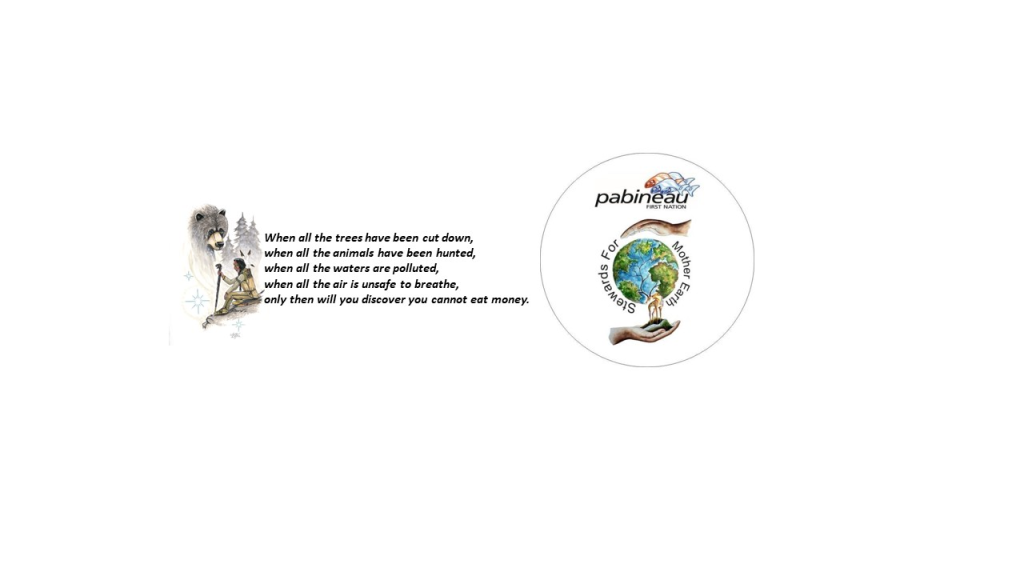
Canada is embarking on an exciting and challenging journey toward economic growth and expanding markets. First Nations are excited about the opportunities this journey offers. On the other hand, we are also aware of the challenges we will encounter on this journey. We at Pabineau First Nation are focused on balance between our four pillars of environment, social, culture and economic as we proceed on this journey. It is not about just chasing money!
Introduction
A great planning model for growing our Indigenous economies while maintaining balance with who we are as Indigenous Peoples. We must preserve our culture in moving forward!
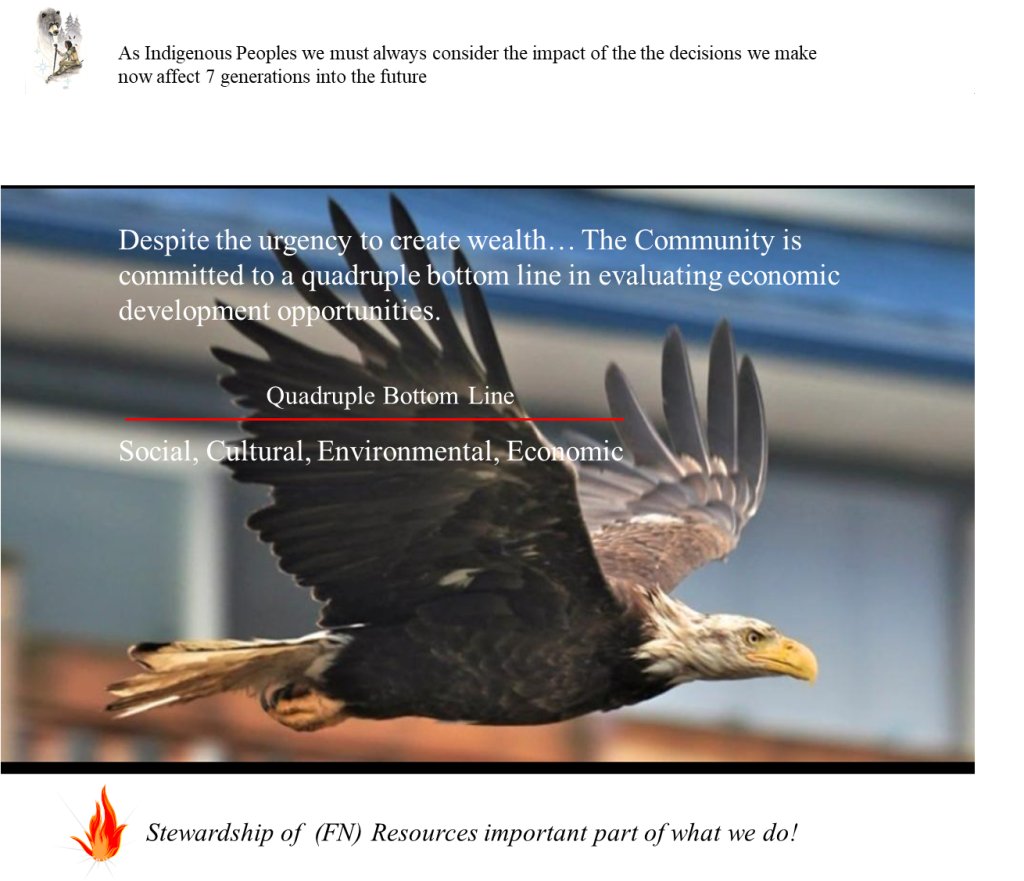
Economic development will be the engine that drives us forward on our journey toward self sufficiency and self government. Opportunity is at our door-step but we must proceed cautiously. We must ensure balance between our four pillars of environment, social, culture and economic. It must never be just about chasing money despite the conditions many of our communities find themselves in.
Pabineau First Nation, is focused on the harmonizing of tradition and innovation to cultivate sustainable growth and prosperity for our community.
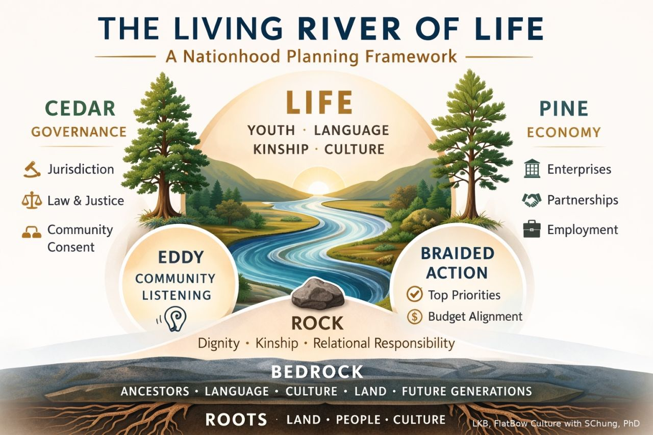
The Living River of Life framework found in this section is “a simple way to think about community planning that aligns identity, governance, economy, and collective wisdom so that life can flourish across generations”.
Communities move like rivers. They flow between ancestors and future generations, carrying memory, responsibility, and possibility.
The Living River of Life framework is a simple way to think about community planning that aligns identity, governance, economy, and collective wisdom so that life can flourish across generations.
The model begins with roots—land, people, language, and culture. These roots nourish.
Beneath everything lies bedrock—ancestors, land, culture, and responsibility to those not yet born. Leadership is always exercised across time.
At the center sits a rock of shared values: dignity, kinship, and relational responsibility. These principles guide governance and development.
Two great systems shape the river ‘s banks. Cedar represents governance—law, jurisdiction, justice, and community consent. Pine represents economy—enterprises, partnerships, employment, and services that sustain the community.
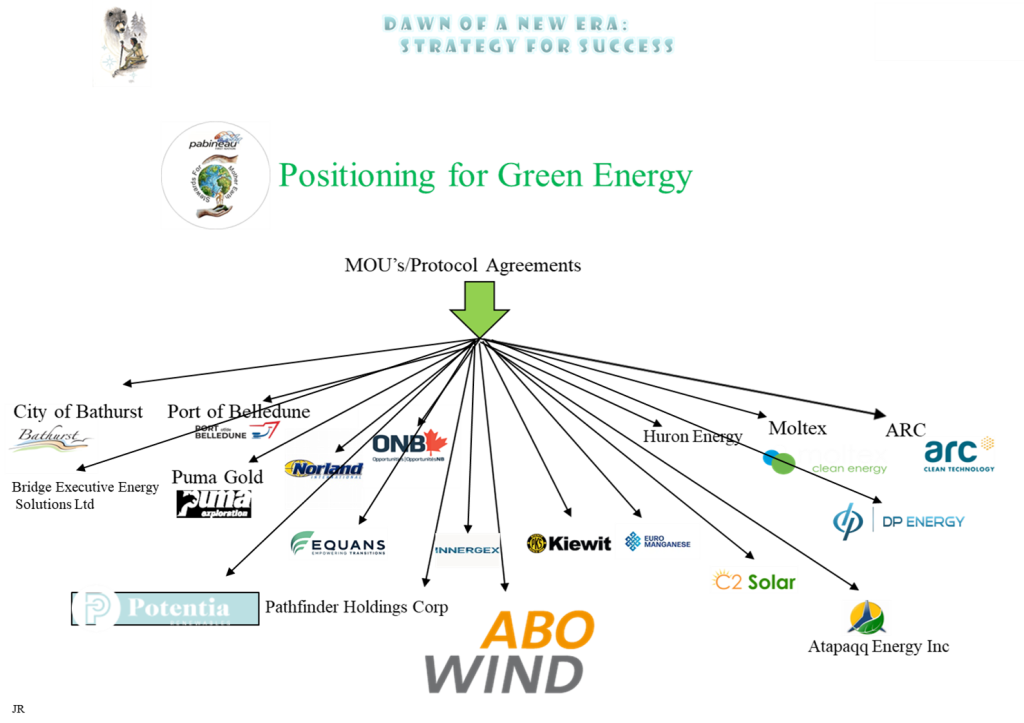
Partnership is the key to success. Below is an example of how we at Pabineau First Nation have proceeded in relationship building and signing MOUs with those companies in positioning ourselves for future projects and partnerships.