
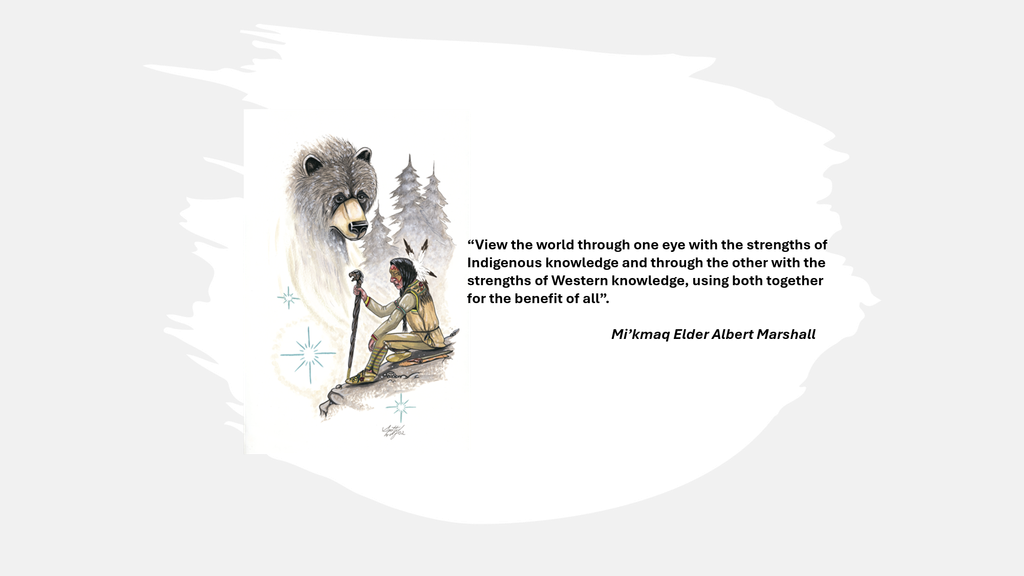
As we move forward it is important that we have a two-eyed perspective as we must be aware of the world around in carrying out our responsibility as Stewards for Mother Earth and protect and nurture future generations. Wise words from Elder Marshall. The comment from Stan Knight puts into focus the conditions many of the people in our communities’ face. The comment from PM Carney on the anniversary of the Royal Commission on Aboriginal Peoples highlights the distance yet to travel on our journey of reconciliation.
Indigenous ownership is helping deliver Ontario’s infrastructure future | LinkedIn
Racing against a deadline to silence a difficult truth – Winnipeg Free Press
Canadian Indigenous Investment Summit: UK, Norway and Canada Launch C$14.1 Billion Climate Finance Initiative |
| British International Investment, Norway’s Norfund and FinDev Canada have signed a memorandum of understanding at COP31 in Antalya to channel C$14.1 billion (US$10 billion) into climate and energy transition projects in emerging markets by 2030. Named “10by30,” the initiative brings together the development finance institutions of three countries, each of which has launched a dedicated climate investment platform this year: Canada’s Climate Mobilisation Strategy, British Climate Partners and the Norwegian Climate Investment Fund. The agreement establishes a framework for the institutions to share investment pipelines, coordinate due diligence and collaborate on climate reporting. The C$14.1 billion target includes private capital they expect to mobilise alongside their own commitments, with funding directed towards renewable energy, electricity transmission and distribution, energy storage, sustainable fuels and industrial decarbonisation. The initiative comes amid a wider push to expand international climate finance at COP31. Canada confirmed it has delivered more than C$14.3 billion in international climate finance since 2015, and set a target of providing a further C$13 billion in climate related support to developing countries by 2031. Clean energy projects and export infrastructure in Canada involve Indigenous equity participation across several major developments. Woodfibre LNG, which has the Squamish Nation serving as its environmental regulator, is expected to begin exports in late 2027. Ksi Lisims LNG, located in Nisga’a Nation treaty territory, counts Shell, TotalEnergies and Blackstone among its partners, while the Haisla Nation holds a majority ownership stake in Cedar LNG. |
| Canada Backs World’s First Net Zero LNG Facility |
| Canada is backing the development of Woodfibre LNG near Squamish, British Columbia, which is expected to become the world’s first net zero LNG export facility when operations begin in late 2027. Powered by British Columbia’s hydroelectricity grid, the facility will have an annual export capacity of 2.6 million tonnes, up from an initial 2.1 million tonnes. Ottawa is investing C$200 million in the project. Beyond its planned export capacity, Woodfibre LNG is notable for the role it gives the Squamish Nation in environmental oversight. It is the first major industrial project in Canada to recognise a non-treaty Indigenous government as environmental regulator. Under a consent-based environmental assessment agreement, the Squamish Nation holds that authority and has set 25 legally binding conditions that the company must meet. The agreement is also reflected in the project’s local economic commitments. More than C$425 million in contracts have been awarded to Squamish Nation-endorsed businesses, and 179 Indigenous workers are employed on the project. A C$1.1 billion impact benefit agreement has also been in place since 2018. “Woodfibre is demonstrating what is possible when governments, First Nations and industry work together,” said British Columbia Premier-Designate Lorne Doerkson. “The Squamish Nation led its own environmental assessment, establishing legally binding conditions and continues to play an important oversight role as the project moves forward.” |
| Ottawa Joins C$49.4 Billion Global Tropical Forest Fund |
| Canada has pledged up to C$560 million over four years to the Tropical Forest Forever Facility, a blended finance vehicle co-led by Brazil and Norway. The facility aims to mobilise C$49.4 billion in public contributions and attract up to C$197.4 billion in private investment, protecting more than one billion hectares of tropical forests annually across over 70 countries. At least 20 per cent of the facility’s conservation payments will be directed to Indigenous Peoples and local communities, tied to verified results rather than aspirational targets. The UK, France, Germany, the Netherlands and Portugal are existing financial contributors to the TFFF, which was launched at COP30 in Belém, Brazil, under the leadership of President Lula da Silva. Canada’s commitment forms part of its broader C$13 billion international climate finance target by 2031. The domestic strategy backing it, “A Force of Nature,” includes C$3.8 billion in nature protection with investments in Indigenous-led stewardship and restoration, including in the Great Bear Sea region and the Lower Fraser River Estuary. |
| Yukon Tungsten Mine Secures Federal Backing to Supply Defence and Aerospace MarketsFireweed Metals Corp’s Mactung mine in the Yukon’s Selwyn Mountains, one of the world’s largest undeveloped high grade tungsten deposits, has secured federal funding to support engineering and technical work as it moves toward a final investment decision. Tungsten is a critical input for defence, aerospace and advanced manufacturing, and western supply chain security for the metal has become an increasing priority as demand grows. The investment builds on a prior C$12.9 million allocation through the Critical Minerals Infrastructure Fund for road and transmission infrastructure serving the region, which included First Nations engagement for the North Canol Road. Budget 2026 proposes C$424.4 million over four years to renew Canada’s Critical Minerals Strategy. The Yukon is home to 14 of Canada’s 34 listed critical minerals, including tungsten at the Mactung deposit. The project is located within the traditional territories of the Kaska Dena Nation and the First Nation of Na-Cho Nyäk Dun. Earlier this year, Fireweed Metals signed an Exploration and Collaboration Agreement with the Ross River Dena Council covering both Mactung and the adjacent Macpass critical minerals project. |
| DRUMBEATS PODCAST |
| 🎧 On This Week’s Drumbeats: How to Tell Whether an Organisation’s Reconciliation Work Is Real |
| What does it take for an organisation’s reconciliation work to move beyond the plan and translate into meaningful action? Australia’s Reconciliation Action Plan programme has more than 3,000 participating organisations, compared with 230 under Canada’s Partnership Accreditation in Indigenous Relations (PAIR) programme, run by the Canadian Council for Indigenous Business. The difference reflects the standards required for recognition. Achieving gold status under PAIR requires compelling evidence of sustained impact over at least five years, placing greater emphasis on long-term results than participation numbers. Barbara Sheehy, Director of Indigenous Affairs and an experienced reconciliation practitioner, has served on Australia’s highest-level peer review panels and works with proponents delivering major infrastructure and civil programmes. Drawing on her experience with both frameworks, she examines what distinguishes organisations that are putting reconciliation into practice from those whose commitments remain on paper, and asks a more fundamental question: how do you know when reconciliation is creating lasting change? Here’s an excerpt from the conversation: Barbara: “The RAP programme in Australia grew from eight organisations to now over 3,000 in their framework. The PAIR programme, same amount of time, but there are only 230 organisations in that framework. What really stood out to me was that to achieve gold status, you needed compelling evidence of sustained impact outcome. You needed to be in a five-plus year bracket for that.” Mark: How can an outsider tell whether the change behind is real and lasting?Barbara: “The way that you know that an organisation is actually doing good work is not always what an organisation is displaying on the outside. Sometimes the best work is happening inside the organisation. When an organisation is ready for change and they want to be transparent about what they’re really doing, but they’ve learned the hard way before they tell the good story, then I think that in itself is the evidence. You’ve got to be in the moment. You’ve got to do the work and you’ve got to be really accountable for what you’re doing in those conversations at the table. And everybody is at the table. This is just next-level generational shift. They are really driving ownership conversations and joint ownership conversations. It’s not just about running an Indigenous business or evolving the procurement conversation. It is asset-owned conversations, then proponent, then government. Those invitations come and who wouldn’t be empowered to want to be part of that?” This conversation has been edited for brevity. Listen to the full episode on The Drumbeats Podcast. |
| Tla’amin Nation Becomes British Columbia’s Largest Single First Nations Forest Tenure Holder |
| Tla’amin Nation has completed the acquisition of Tree Farm Licence 39 Block 1 from Western Forest Products, a 154,000 hectare forestry operation on the Sunshine Coast that makes the Nation the largest single First Nations forest tenure holder in British Columbia. The licence carries an allowable annual cut of 469,200 cubic metres, and with the Nation’s other tenures added in, Tla’amin now holds more than 600,000 cubic metres of annual cut. The acquisition is backed by a federal loan guarantee that ring-fences the risk within the forestry operation, protecting the Nation’s other businesses, assets, programmes and services. Western Forest Products has signed a 25 year timber purchase agreement, providing revenue certainty over the licence’s first term. CIBC Commercial Banking assisted in closing the C$80 million transaction. Tla’amin is managing the tenure under a 300 year forest plan built around the Nation’s stewardship values. A Douglas fir planted in the territory today takes roughly 50 years to reach harvest, and recruiting new forest to become old growth takes centuries. The plan stands in contrast to the short term pressures facing the sector, including US tariffs that are pushing parts of the industry toward faster, cheaper harvesting cycles. |
| Looking Ahead |
The week’s developments point to the growing scale and diversity of capital flowing into climate, energy and critical minerals projects. From the C$14.1 billion 10by30 initiative to Canada’s commitments in tropical forest conservation and critical minerals development, public finance is helping advance projects with implications for energy security, industrial supply chains and economic development.
Across Canada, Indigenous Nations are taking on expanding roles in these developments, from environmental oversight and equity participation to commercial partnerships and resource development agreements. As major projects move towards construction and production, the terms of these partnerships, and the extent to which they deliver lasting economic participation, will remain important to watch.
We’ll continue to follow the developments shaping Indigenous investment in Canada in next week’s edition.
Kwakwaka’wakw artist has dream come true with Bata Shoe Museum exhibition | CBC
Peguis First Nation members, including chief and councillor, try to oust CFS leader | CBC News
Hibernation is Just the Tip of the Iceberg – Native News Online
Our Military Veterans Deserve Our Thanks and a Place to Call Home – Native News Online
Snuneymuxw sign agreement with Harmac owners – Victoria Times Colonist
Manitoba group needs $17M to bring 3,000 Indigenous artefacts home
https://www.cbc.ca/news/canada/manitoba/peguis-tries-to-oust-cfs-leader-9.7429796
Gull-Masty surprised premier raised abolishing Indian Act
70% of Nunavut children live in households that skip meals: report
Indigenous veterans honoured at Yellowknife ceremony
Repatriation group visits Indigenous items for sale by Swiss collector | CBC News
Canada appoints new Indigenous languages commissioner | CBC News
1,618 mineral tenures staked in B.C. Indigenous protected areas | The Narwhal
Settlement approved in NS First Nation class action over non-consensual MRI scans
Mi’kmaw policy leader welcomes budget spend on First Nations housing and infrastructure
National Congress of American Indians calls on Trump to reverse Lake Ontario change
Leaders push Ottawa to enforce First Nations laws
Jobs, critical minerals and salmon: the debate over a proposed B.C. mine | The Narwhal
The Quechua rapper and an artistic movement reclaiming language of the Incas | Peru | The Guardian
Council seeks to intervene in case – The Eastern Door
Kebaowek First Nation turns to Supreme Court
NewsIndigenous women leaders say budget doesn’t address their realities | CBC News
A Remembrance Day conversation with First Nations Chiefs – Alberta Native News
National Newswatch | Alberta seeks to strike First Nation court…
Stan Knight
Most Canadians have never spent a night in a First Nations, Métis or Inuit community. Here’s what everyday life looks like in many of them, and why it’s harder thanmost people think.
Imagine this is your life:
・Your tap water isn’t safe to drink. As of June 2026, there were still 38 long-term drinking water advisories in 36 First Nations. In Neskantaga First Nation, the advisory has lasted more than 31 years.
・Your house is full. More than half of Inuit living in Inuit Nunangat live in crowded homes. For non-Indigenous Canadians, it’s fewer than 1 in 10.
・Your home needs major repairs. That’s true for more than a third of First Nations people with status living on reserve, and about a third of Inuit in Inuit Nunangat. For non-Indigenous Canadians, it’s under 6%.
・Your fire risk is far higher. First Nations people on reserve are more than 10 times more likely to die in a fire than non-Indigenous people. For Inuit, it’s more than 17 times.
・Help is far away. In many remote communities, the nearest hospital is a flight away, building materials arrive by winter road or barge, and groceries cost far more than in the south.
・Waiting is normal. A repair that takes a day in the city can take months when the parts, the trades and the funding all have to come from somewhere else.
None of this is because of the people who live there. It’s the result of generations of policy, underfunding and distance.
And yet these communities hold on to their languages, their land, their families and each other in ways many cities have lost. The strength is real. So are the barriers.
If you plan, fund, build or make policy for Indigenous communities, start from their reality, not yours.
If you’ve lived or worked in a remote Indigenous community, what’s one thing you wish more people understood?

