

This week’s articles include a criticism of Premier Wab Kinew for saying that residential school denialism should not be illegal. I agree with Premier Kinew’s stance that education and information is the way to combat the denialism and misinformation. The criticism of PM Carney’s push for economic reconciliation generated this response from Wilton Littlechild, who co-chaired the Truth and Reconciliation Commission (TRC), told The Canadian Press that economic reconciliation remains key — but not the way Carney sees it. “Right now, it’s like a four-legged stool with one leg missing,” he said. The missing leg, Littlechild explained, is true and meaningful respect for Indigenous rights.
Lots of interesting links below:
Indigenous groups invest $65.3 million in Coastal GasLink pipeline in BC
B.C. party leaders lay out their plans for DRIPA in debate | CBC News
Why is Indigenous tourism in the US becoming so popular?
An Inbetween leader is what Canada needs now: Jody Wilson-Raybould
Pacific Link ‘pipeline to more litigation’: AFN regional chief
Mark Carney is banking on economic reconciliation, but Indigenous leaders say he’s missing the mark
Indigenous leaders urge vote to remain in Canada ahead of Alberta referendum – Windspeaker.com
B.C.’s Indigenous Rights law is now an election issue | The Narwhal
Fascinating facts about Indigenous cultures around the worl
Indigenous communities raise environmental concerns about Pacific Link pipeline | Watch
Supreme Court to hear appeal of First Nation’s Nootka Island claim
Thanks to Farsad Kiani for this:
CANADA’S FIRST NATIONS: ORIGINAL BUILDERS, DEFENDERS, INNOVATORS AND CONSTITUTIONAL PARTNERS
Before anyone promises to take #Alberta out of #Canada, they should understand whose history, lands and constitutional rights they are proposing to take with them.
Canada was not built solely by European settlement.
Long before Confederation, complex Indigenous nations governed, traded, navigated, defended, and managed vast territories across what is now Canada.
Among the most historically significant are the #Cree, #Haudenosaunee, #Anishinaabe, #BlackfootConfederacy and #Mikmaq.
The #Cree developed the largest communication and trade networks in #NorthAmerica, with #TraditionalTerritories across #Alberta, #Saskatchewan, #Manitoba, #Ontario and #Quebec.
The #HaudenosauneeConfederacy, including the #Mohawk, #Oneida, #Onondaga, #Cayuga, #Seneca and #Tuscarora nations, developed one of the world’s oldest participatory political systems across #Ontario, #Quebec, #NewYork and the #StLawrenceValley.
The #Anishinaabe, including the #Ojibwe, #Odawa and #Potawatomi, established trade and transportation networks throughout the #GreatLakesRegion, including much of #Ontario and #Manitoba.
The #BlackfootConfederacy, including the #Siksika, #Kainai, #Piikani and #Amskapi_Piikani, governed and defended large territories across #SouthernAlberta, #Saskatchewan and #NorthernMontana.
The Mi’kmaq, whose traditional territory is #Mikmaki, occupied and governed lands across #NovaScotia, #NewBrunswick, #PrinceEdwardIsland, #Newfoundland, parts of #Quebec, and #Maine.
Other nations, including the #Inuit, #CoastSalish, #Haida, #Nisgaa, #Dene, #Tlingit, #Wolastoqiyik, #Passamaquoddy, #Huron_Wendat, #Tsuutina, #Stoney_Nakoda, and many others, also maintained sophisticated systems of governance, commerce, diplomacy, long before Canada became a country.
Many of Canada’s transportation routes, trade corridors, resource regions and economic corridors follow pathways that Indigenous nations used for centuries.
One fact many Canadians are still not aware of is that #IndigenousRights in Canada are not rights granted by governments.
#TreatyRights are recognized and affirmed under #Section35 of the #ConstitutionAct1982, making them part of Canada’s #SupremeLaw.
These rights are part of, the #PeaceAndFriendshipTreaties, the #RobinsonTreaties, the #NumberedTreaties and modern #LandClaimAgreements.
As constitutional rights, they cannot be unilaterally removed or overridden by a change in government policy.
Understanding #Indigenous history is not only about acknowledging the past. It is about understanding the constitutional, economic, legal and cultural foundations upon which modern Canada was built.
Alberta cannot vote away First Nations’ treaty rights or take their consent to separation for granted.
Bill C-27 gets royal assent, giving legal force to self-government treaty
First Nations reject proposed Bill C-39 following its first vote
Six Nations takes Canada and Ontario to court over Haldimand Tract | CBC News
National gathering brings Indigenous midwives together in Thunder Bay – Anishinabek News
AFN draft calls for a First Nations-controlled wealth fund
Supreme Court decision balances Gladue and concern for women
Indigenous laws are laws as this Supreme Court decision attests. R. v. Cope – SCC Cases
India, Australia explore cooperation in tribal art, heritage and cultural exchanges
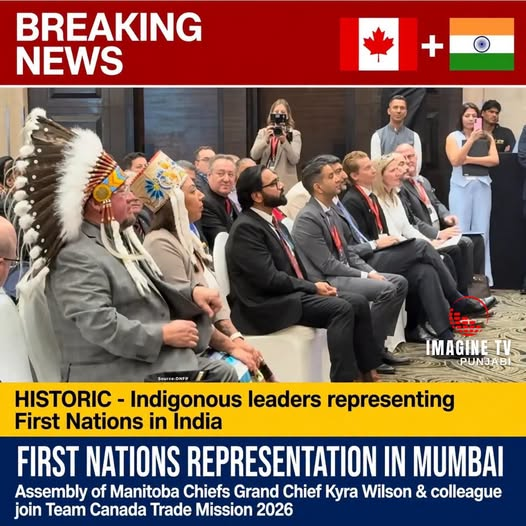
AMC Grand Chief Kyra Wilson and Minegoziibe Anishinabe Chief Derek Nepinak in India for Canada’s trade mission, running from October 12–17. They seek markets, investment and partnerships for First Nation-owned businesses in agriculture, clean energy, infrastructure and technology. Wilson stressed First Nations must directly shape trade decisions affecting their lands, resources and economies.
Ontario’s World-Class Nuclear Supply Chain Building Canada’s First Microreactor Project
BWXT Canada selected to build and deploy BANR reactor technology for New Brunswick pilot project, creating nearly 200 good-paying jobs
October 05, 2026
Table of Contents
TORONTO — Ontario is leveraging its world-class nuclear expertise to strengthen made-in-Canada energy supply chains, support skilled jobs across the country and create new opportunities for Canada’s nuclear industry. Today, Stephen Lecce, Minister of Energy and Mines, and René Legacy, Deputy Premier and Minister of Finance, Treasury Board and Energy for New Brunswick, announced that Ontario-based BWXT Canada has been selected to fabricate and deploy Canada’s first Transportable Nuclear Power Plant (TNPP) using the BWXT Advanced Nuclear Reactor (BANR) technology for the Indigenous-led 50-megawatt (MW) pilot project in Belledune, New Brunswick. Building on Ontario’s 60-year nuclear legacy, the TNPP project will deliver reliable, clean baseload power for up to 40,000 homes, create more than 150 jobs during development and support approximately 40 long-term positions once operational. This project highlights Ontario’s world-class nuclear sector, as it works to strengthen made-in-Canada nuclear capabilities and creates technological advancements to support Canada’s energy future.
“Ontario is a world leader in nuclear technology, from building the G7’s first grid-scale small modular reactor to delivering major nuclear refurbishment projects ahead of schedule and under budget,” said Stephen Lecce, Minister of Energy and Mines. “We’re building on that legacy and proud to announce that Ontario’s nuclear supply chain is being harnessed to build Canada and the G7’s first commercial Transportable Nuclear Power Plant. This is the future of reliable, clean energy for remote and northern communities – including mines – connecting them to reliable baseload power virtually anywhere. Ontario’s nuclear expansion plan will create 150,000 jobs, securing our position as a global leader in the development of next generation nuclear technology.”
Developed by Prodigy Clean Energy, the TNPP represents an innovative new approach to deploying nuclear energy in Canada. Unlike traditional nuclear facilities, these plants are designed to be built off site and transported to where power is needed. By integrating small modular reactors and microreactors into transportable power plants, this technology has the potential to bring reliable, clean nuclear energy to a wider range of locations, including remote and northern communities, Indigenous communities and industrial and grid-connected sites. This innovative technology has potential to help overcome infrastructure challenges of delivering reliable power to remote locations while expanding access to clean, reliable energy across Canada.
“By launching the first Indigenous-led nuclear project in Canada and building the supply chain in New Brunswick, we are showcasing the strength and leadership of the province, First Nations, and our nuclear-trained workforce,” said René Legacy, Deputy Premier and Minister of Finance, Treasury Board and Energy. “I am encouraged by potential for this innovative project to drive significant economic growth in the region and provide clean energy for communities across New Brunswick, throughout Canada, and around the world. Northern New Brunswick has a rich industrial history, and the quality of work has always been first class. Our workers are ready to contribute – to help make this deployment a success.”
Under an agreement with Pabineau First Nation and Eel River Bar First Nation, this Indigenous-led TNPP pilot project will establish a First Nations-owned commercial power generation facility and energy innovation campus in Belledune, New Brunswick. The project will include a centralized hub for operations, maintenance and workforce training to support a future fleet of TNPPs serving northern and remote communities, as well as a state-of-the-art Indigenous Energy Innovation Visitor Centre.
Ontario will continue building on its decades of nuclear expertise and investing in new technologies to help secure reliable, affordable power needed to support new homes, attract investment and drive economic growth. As part of the province’s first-ever integrated energy plan, Energy for Generations, the government is making record investments in nuclear energy to strengthen Canada’s energy sovereignty, protect local jobs and build a more self-reliant economy in the face of U.S. tariffs. From refurbishing the Darlington and Pickering nuclear generating stations to building the G7’s first grid-scale small modular reactor, this historic nuclear buildout is expected to create 150,000 new jobs and contribute $800 billion into Canada’s economy. Ontario’s nuclear sector already supports 80,000 jobs across more than 200 companies, with more than 90 per cent of nuclear project costs staying in Canada to support domestic workers, manufacturers and suppliers.
Quick Facts
- Ontario’s Independent Electricity System Operator (IESO) forecasts that the province’s electricity demand could increase by as much as 90 per cent by 2050, due to population growth, new housing, electrification, advanced manufacturing, and expansion of critical minerals supply chains.
- Nuclear power currently provides about 50 per cent of Ontario’s electricity supply and has positioned Ontario as one of the cleanest electricity grids in the world.
Quotes
“The BWXT team is designing BANR to meet a variety of real-world heat and electricity demands that currently cannot be met without the use of carbon-emitting sources with complex fuel logistics. By joining forces with Prodigy and integrating BANR with Prodigy’s transportable platform design, we are truly expanding BWXT’s horizons for future customers while reinforcing Canada’s role at the forefront of innovative, deployable advanced nuclear energy solutions.”
– John MacQuarrie
President of Commercial Operations, BWXT
“BWXT’s BANR is a best-in-class advanced nuclear technology with a credible pathway to delivering the G7’s first commercially operating Transportable Nuclear Power Plant. This Canadian pilot will serve as the reference to deploy a BANR-TNPP fleet across Northern, industrial and global energy markets.”
– Mathias Trojer
President and CEO, Prodigy Clean Energy
“We are supporting this Canadian-led program with the engineering depth, regulatory insight and proven delivery experience needed to advance Prodigy’s TNPPs to commercial implementation. We bring scale and trust to the project’s supply chain, combining decades of Canadian nuclear expertise with strong manufacturing capabilities, qualified facilities and skilled people with a demonstrated track record.”
– John D’Angelo
President and CEO, Kinectrics

