
John Stackhouse – RBC
The #CanadaInvestmentSummit wasn’t just about attracting global capital; it was about advancing Canada’s economic strategy to generate more wealth, sustainably, for future generations. (Side note: that’s what sovereign wealth funds and other long-term investors want, too.)One key is economic reconciliation — and the role Indigenous communities can play in big investments. Increasingly, it’s those communities creating, owning, and speeding up projects.
To mark the summit and discuss the path forward, we hosted a closing dinner with National Chief Cindy Woodhouse – Nepinak, former National Chief Ovide Mercredi, Ontario Regional Chief Abram Benedict, and a host of other Indigenous and corporate leaders.
Our new report, Closing Canada’s Indigenous Investment Gap, outlines the $51-billion nation-building opportunity.The report’s key message: while ownership is important, it’s not the only key to successful development. We need to expand Indigenous loan guarantees, and look beyond core projects for economic opportunities.
https://mining.com.au/bcs-first-indigenous-owned-port-opens-boosting-critical-minerals-flow
‘Very harmful’: website uses AI to generate northern Indigenous news ‘correspondents’ | CBC News
Tribal Gaming Gains Ground in Prediction Market Fight
Indigenous Partnership Key to Next Generation of Major Projects – FNFA
‘Carbon fever’ threatens hard-won Indigenous rights in Bolivian Amazon | Bolivia | The Guardian
Land Back: Mi’kmaq Nation Acquires More Than 80 Acres – Native News Online
Infocus: Indigenous land guardians and the boreal forest
Scar Tissue: The legacy of medical experiments on Inuit in the Arctic
First reading: As First Nations acquire new land, political control, Beijing appears to take notice
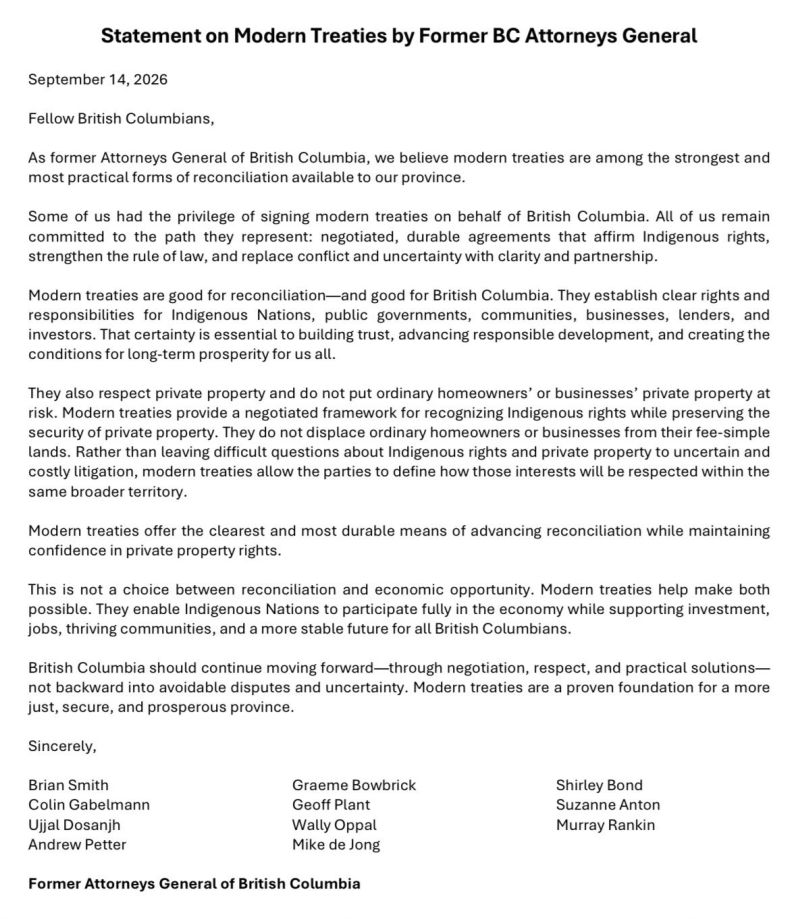
Former BC Attorney Generals and stance on modern treaties
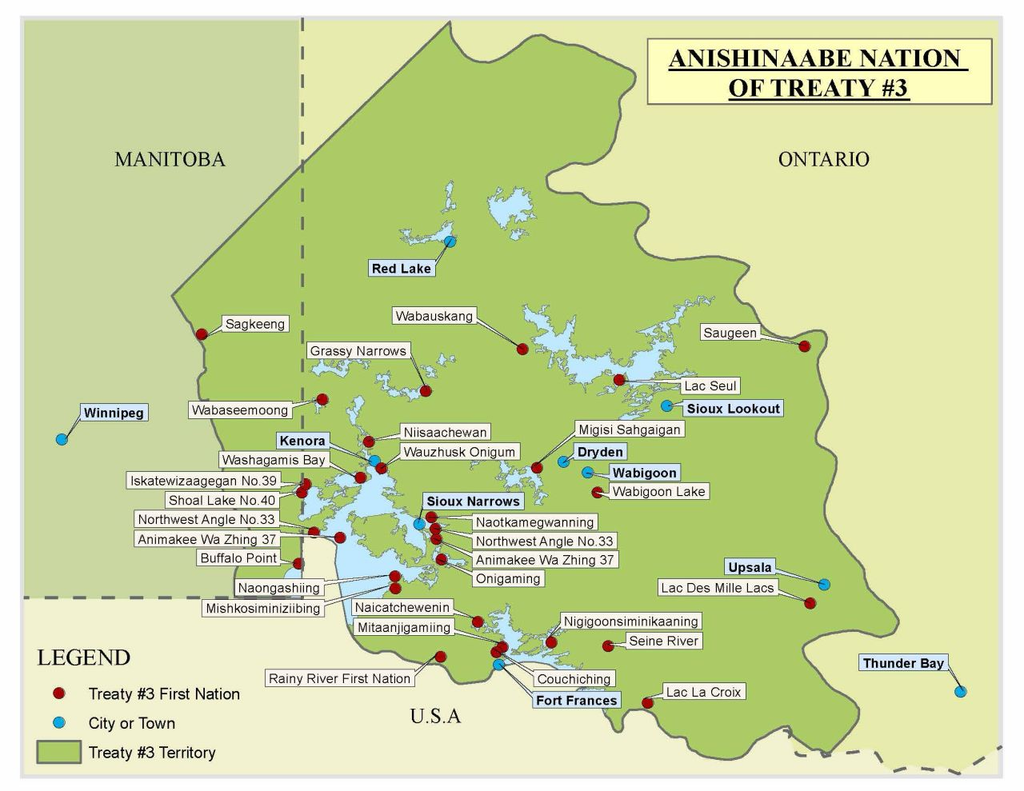
Northern Ontario First Nations – The path to critical minerals and mining
Atlantic Economic Panel Imagine an Atlantic Canada where growth and genuine partnership with Indigenous communities are built together from the start. Some of the biggest opportunities ahead will shape this region for generations. The partnerships behind them should be just as lasting. That means Indigenous communities at the table from day one, helping shape the opportunity, sharing in its benefits and building what comes next.
That’s the kind of growth worth building toward.
| Canada Investment Summit Draws C$500 Billion of New Commitments |
| Canada’s first national Investment Summit closed on 15 September, having drawn nearly C$500 billion in new investment commitments. The largest single commitment came from CPP Investments and Brookfield Asset Management, which launched the Maple Fund, a joint framework to deploy up to C$50 billion in equity across critical infrastructure and strategic industries over five years. Canada’s biggest banks separately committed nearly C$325 billion in new financing for domestic businesses and infrastructure, led by TD Bank’s C$150 billion commitment over five years. Canada now has the lowest marginal effective tax rate on new investment in the G7, 6.4 per cent, following Prime Minister Mark Carney’s introduction of the Productivity Mega Deduction. The permanent measure extends immediate expensing to more than 65 per cent of depreciable business assets, up from roughly 15 per cent, covering mining property, pipelines and rail infrastructure. The tax change sits alongside the new Build Canada Strong Act, which sets a single federal standard, one project, one review, one year, replacing the separate provincial and federal reviews that have previously added time and uncertainty for investors. Carney described the Summit as laying the foundation for what he called “a Canadian investment super cycle.” But alongside the focus on speed, taxation and project approvals, Carney made a broader commitment that could shape how major Indigenous projects are developed across the country: Canada will build “in full partnership with Indigenous Peoples from the start.” |
| Australia Locks In 20 Years of Canadian LNG Supply Australia’s Santos has signed a Heads of Agreement with Ksi Lisims LNG for 1 million tonnes per annum of liquefied natural gas over 20 years, the project’s third international offtake deal this year. Sales are on a free-on-board basis, subject to a full sales and purchase agreement. Ksi Lisims is a partnership between the Nisga’a Nation, Rockies LNG Partners and Western LNG, developing a floating LNG terminal on Nisga’a-owned land on British Columbia’s north coast. Ksi Lisims is a C$30 billion project that would become Canada’s second-largest LNG terminal, exporting up to 12 million tonnes per annum. With Santos included, announced offtake now covers roughly two-thirds of that capacity, alongside earlier agreements with Shell, TotalEnergies, Uniper and Germany’s SEFE. The deal lands as Ksi Lisims works toward a final investment decision by the end of the year. Ksi Lisims is a partnership between the Nisga’a Nation, Rockies LNG Partners and Western LNG. Manitoba Targets Tripling of Critical Mineral Output Manitoba will aim to triple its critical mineral production within five years, Premier Wab Kinew announced at the Canada Investment Summit on 15 September, alongside plans to expand shipments through the Port of Churchill. The province’s critical mineral production has averaged 78,742 tonnes annually over the past six years. These minerals underpin three critical areas of the global economy: electrification and data centre demand, through Hudbay’s copper, zinc and gold; the decarbonisation supply chain, through Silex’s high-purity silica for semiconductors and solar; and global food security, through PADCOM’s potash for fertiliser. The announcement came alongside Manitoba-based mining companies Hudbay Minerals, Silex and the Potash and Agri Development Corporation of Manitoba, whose potash already ships through the Port of Churchill to Europe. Manitoba’s Toronto delegation included Indigenous leaders from the Assembly of Manitoba Chiefs, Anisininew Okimawin, Southern Chiefs’ Organization and Manitoba Métis Federation. Kinew said the province intends to build up its mining sector “the right way, in collaboration with Indigenous communities.” Insights: Carney Announces Canada’s One Project, One Review, One Year Policy, and the Lowest Tax Rate in the G7 Canada is changing the terms for investment. Under the incoming Build Canada Strong Act, major projects will move towards a single federal standard, replacing years of layered provincial and federal reviews with what Prime Minister Mark Carney calls “one project, one review, one year.” The policy comes with a significant tax shift. Carney says Canada will have the lowest effective tax rate on new investment in the G7, at less than half the US rate, once the Productivity Mega Deduction takes effect. But speed and certainty matter only if they translate into projects. More than 160 projects feature in the Canada Investment Summit prospectus across energy, critical minerals and infrastructure, many running through Indigenous territory. Among them is the C$70 billion Churchill Falls and Gull Island agreement with the Innu Nation, which Carney cited as an example of Indigenous partnership at scale. Investor confidence is also strengthening despite escalating trade tensions with the US, with recent surveys pointing to growing appetite for Canadian investment opportunities. [Read the Full Article] 🎧 On This Week’s Drumbeats, A Special Episode: Inside Carney’s £1 Trillion Summit This week, Prime Minister Mark Carney opened Canada’s first ever Investment Summit in Toronto. It drew C$500 billion of new investment in Canada. Most of the 160 projects featured in the summit run through Indigenous territory. Mark Magnacca puts the question the summit itself is built around. Does Indigenous co-ownership reduce investment risk? Does it turn political risk into opportunity? Three guests answer with numbers, not theory. Charles Morven of Nisga’a Lisims Government on the poll that flipped public support once his nation led the project. Ernie Daniels of the First Nations Finance Authority on the First Nation that went from unable to imagine $35 million in debt to holding $1.4 billion. Chana Martineau of the Alberta Indigenous Opportunities Corporation on $745 million deployed, zero defaults. Here are excerpts from the special episode: Mark: Does Indigenous co-ownership actually reduce investment risk, or is that just the story we tell ourselves? Charles Morven: I’d say it does, and I can give you a real example. One of the things we did, and no one thought we could pull it off, was bring all the affected nations together in one room. We polled it. 76 per cent of people in those ridings supported an LNG project. But 86 per cent supported one led by an Indigenous nation. Mark: That’s a ten-point swing just from who’s leading the project. Charles Morven: That’s the legitimacy piece. It’s not something a due diligence process can manufacture. Rob: Ernie, you’re financing a lot of this. What does that actually look like from the lender’s side? Ernie Daniels: The nations that borrow under our pool get a double-A credit rating, fixed for 30 years. When I started talking to First Nations about taking equity in 2012, they couldn’t fathom $35 million in debt. Now you’ve got a First Nation at $1.4 billion. It’s a complete transformation. Rob: From $35 million to $1.4 billion. That’s not incremental, that’s a different category of investor. Ernie Daniels: It’s a 180. The scale changed because the confidence changed. Mark: Chana, AIOC sits closer to the deal itself. Are you underwriting these as social investments or as commercial ones? Chana Martineau: Commercial, full stop. We’ve deployed $745 million in loan guarantees across 43 First Nations and Métis groups, zero defaults. We look at investment-grade opportunities like any other investor. Mark: So drop the “Indigenous energy” label altogether? Chana Martineau: That’s exactly it. I don’t want to talk about Indigenous energy projects. I want to talk about energy projects in Canada that have never been more investable. This conversation has been edited for brevity. You can listen to the full episode on The Drumbeats Podcast. The Bigger Picture Amid escalating trade tensions, the Canada Investment Summit tells a different story. Investor confidence in Canada has held firm. We’ll be back next week with more news and insights covering Indigenous investment in Canada. |
Nokiiwin launches underwater drone at Climate Change Awareness Gathering – Anishinabek News
Sen. Heinrich Leads Fight to Protect Tribal Gaming Rights – Native News Online
Grand chief tells Carney summit resources ‘are not theirs to give’
Lac Simon warns LNG project requires FN consent
From beaver tails to seal ribs, new Ts’msyen cookbook spotlights coastal delicacies – Indiginews
Uranium mines pose first test for state-recognized Mount Taylor cultural landscape in New Mexico
Tribes looking beyond gaming and geography for revenue – Native News Online
https://www.cbc.ca/news/indigenous/sfu-burnaby-campus-first-nations-name-9.7346602
In ‘B.C.,’ First Nations practice and learn salmon traditions — key to food security – Indiginews
Call in the goats: Kanaka Bar recruits herd for help with wildfire risk – Indiginews
From surviving to thriving: Kokum’s House builds a recovery path in Cold Lake – Alberta Native News
Wilful blindness or honest belief? Court hears Indigenous identity defamation appeal | CBC News

